CYBERSECURITY DEVELOPMENT: MALI VISIT GHANA FOR KNOWLEDGE SHARING
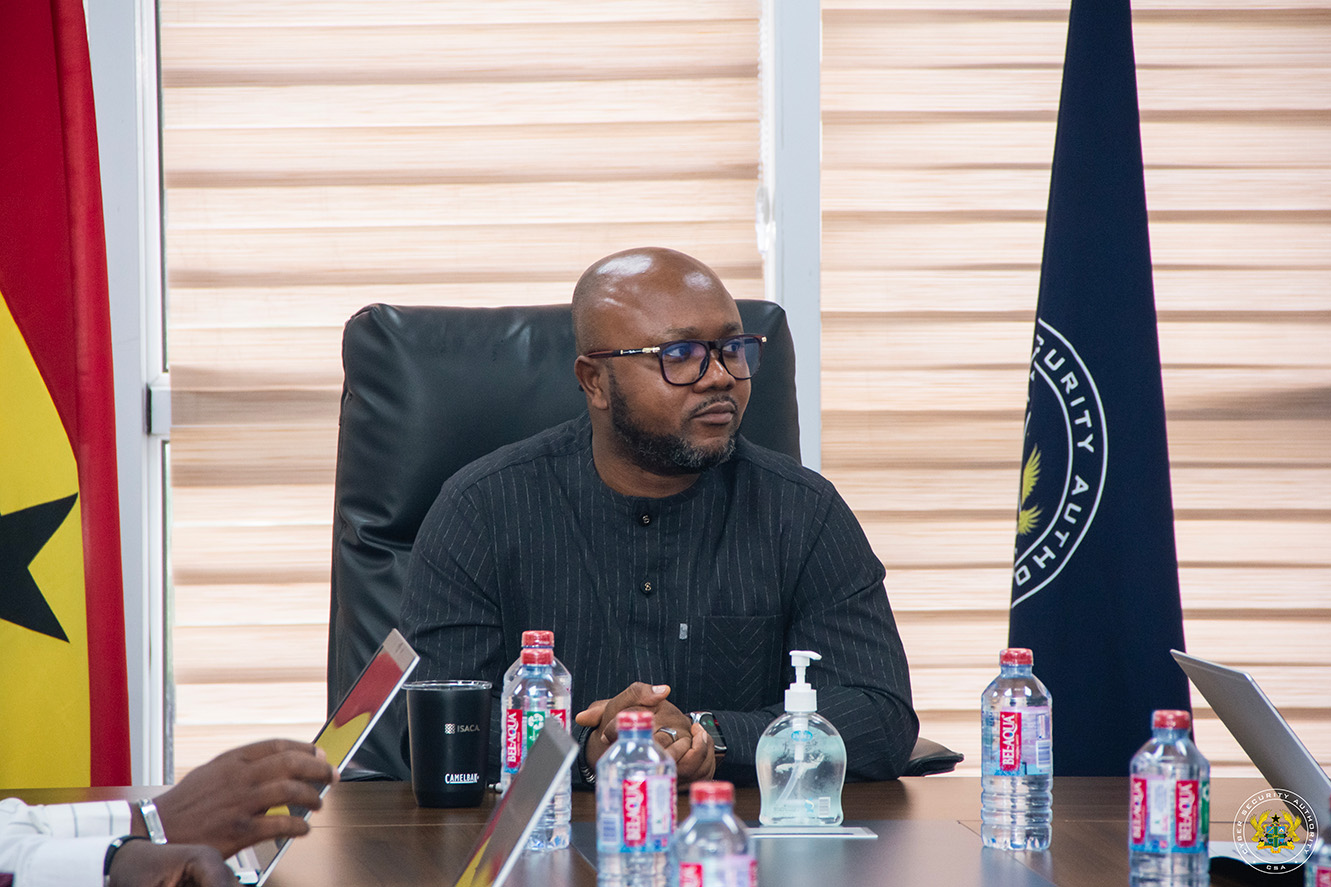 A six-member delegation from the Republic of Mali visited the Cyber Security Authority (CSA) in Accra from September 1 to 4, 2025, on a study tour to deepen collaboration and learn from Ghana’s experience in building a robust cybersecurity ecosystem.
The delegation consisted of representatives from the Computer Emergency Response Team (ML-CERT), the Malian Regulatory Authority for Telecommunications, Information and Communication Technologies, and Posts, Permanent Secretariat of the National Security Council of Mali, Ministry of the Digital Economy and Modernisation of Administration, and the Agency for Information and Communication Technologies.
The Ag. Director-General of the CSA, Mr. Divine Selase Agbeti, who received the delegation, noted that the visit will foster collaboration and enhance intelligence-sharing between Ghana and Mali to strengthen the cybersecurity ecosystems of both countries and the continent at large.
Senior Manager at the National Computer Emergency Response Team (CERT-GH), Mr. Isaac Socrates Mensah, took the delegation through Ghana’s national cyber security governance framework, institutional structures, and operational ecosystem to support Mali’s ongoing efforts to transition its CERT into an autonomous National Cyber Security Authority.
He elaborated on Ghana’s hybrid CERT ecosystem, in which CERT-GH serves as the central coordinating hub while sectoral CERTs operate within critical sectors, such as telecommunications, banking and finance, government, and security. He explained that the development of an ecosystem must follow a guide in a phased approach, starting with assessing national assessments, selection of an operational model, identification of critical sectors, stakeholder engagement, and the establishment of a strong legal foundation.
As part of the visit, the delegation toured three (3) established Sectoral CERTs and Security Operating Centres to gather first-hand experience on international coordination, baseline security controls, and phased 24/7 monitoring. These facilities were the National Communications Authority, the Telecommunications Sectoral CERT, the National Information Technology Agency and Virtual InfoSec Africa.
Recommendations for Mali included adopting a hybrid monitoring model, strengthening forensic capabilities, and pursuing international membership to enable faster incident coordination.


Social Media Links
Events and Gallery

Advisories
Government Advisory
Business Advisories
Public Advisories
Children Advisories
